Church Finance Trends 2026
A listening-based research brief from U.S. church leaders
Above-the-Fold Editorial Introduction
Church finance is entering a more complex chapter in 2026—marked by economic uncertainty, shifting giving patterns, and growing operational pressure on leadership teams.
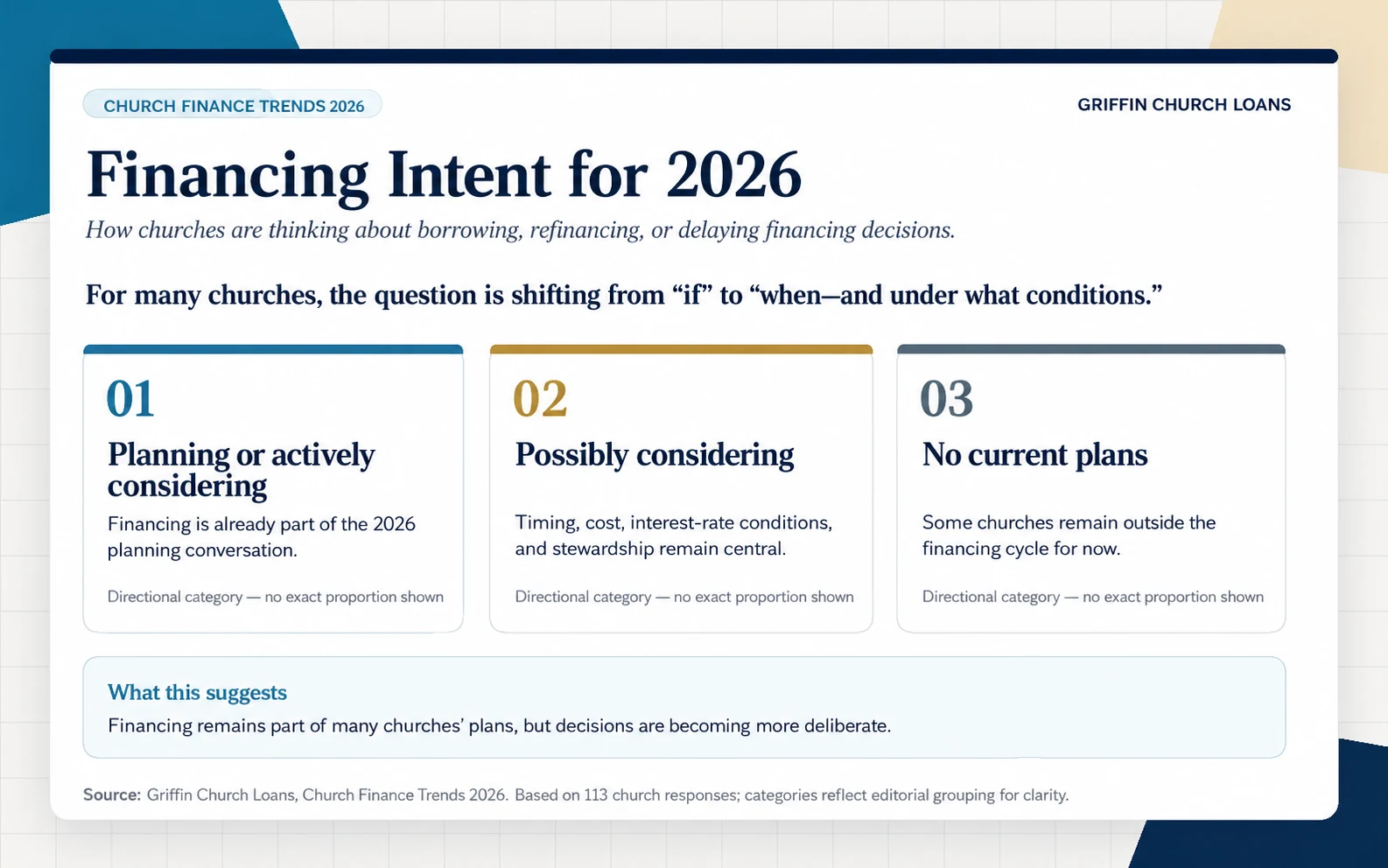
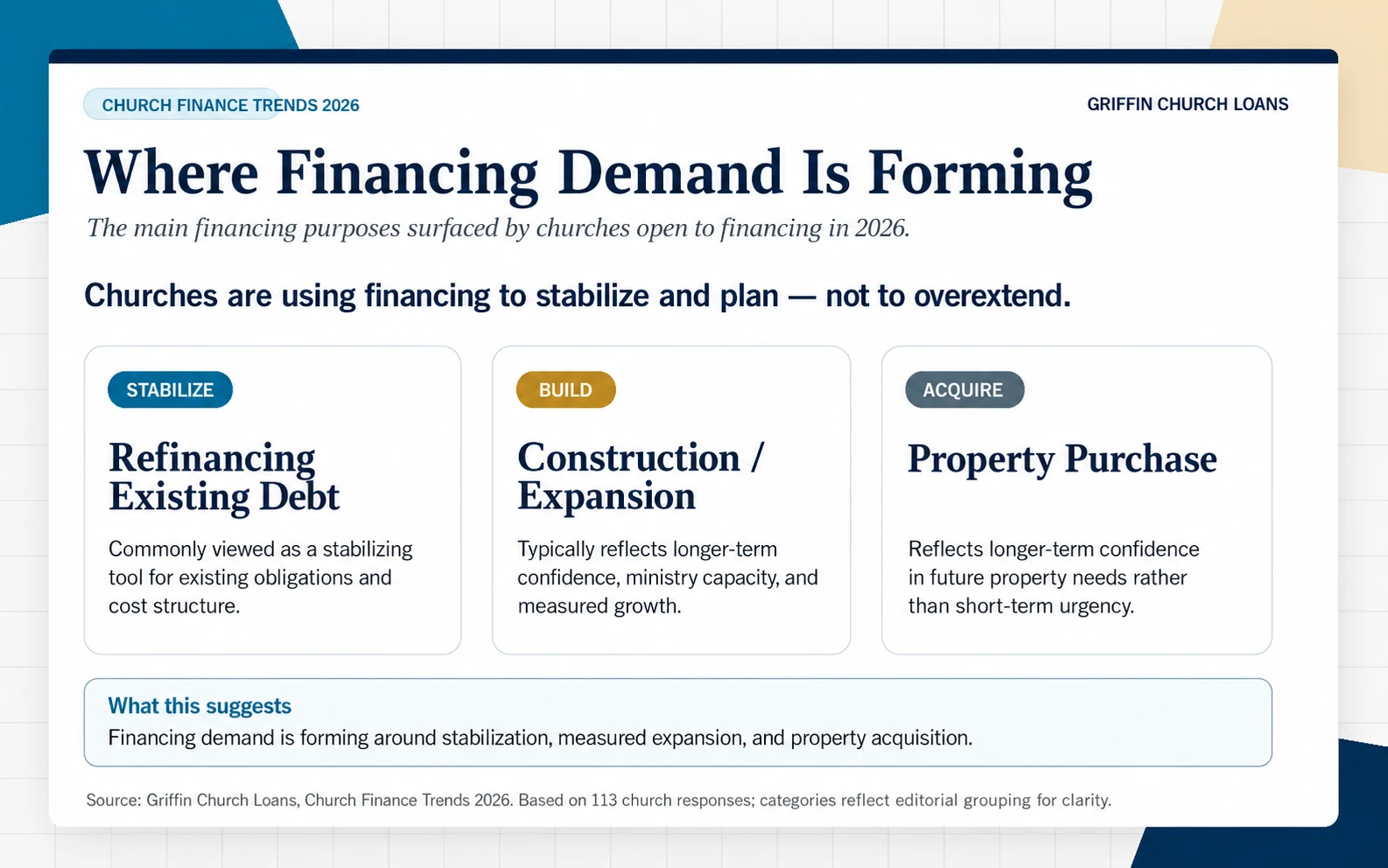
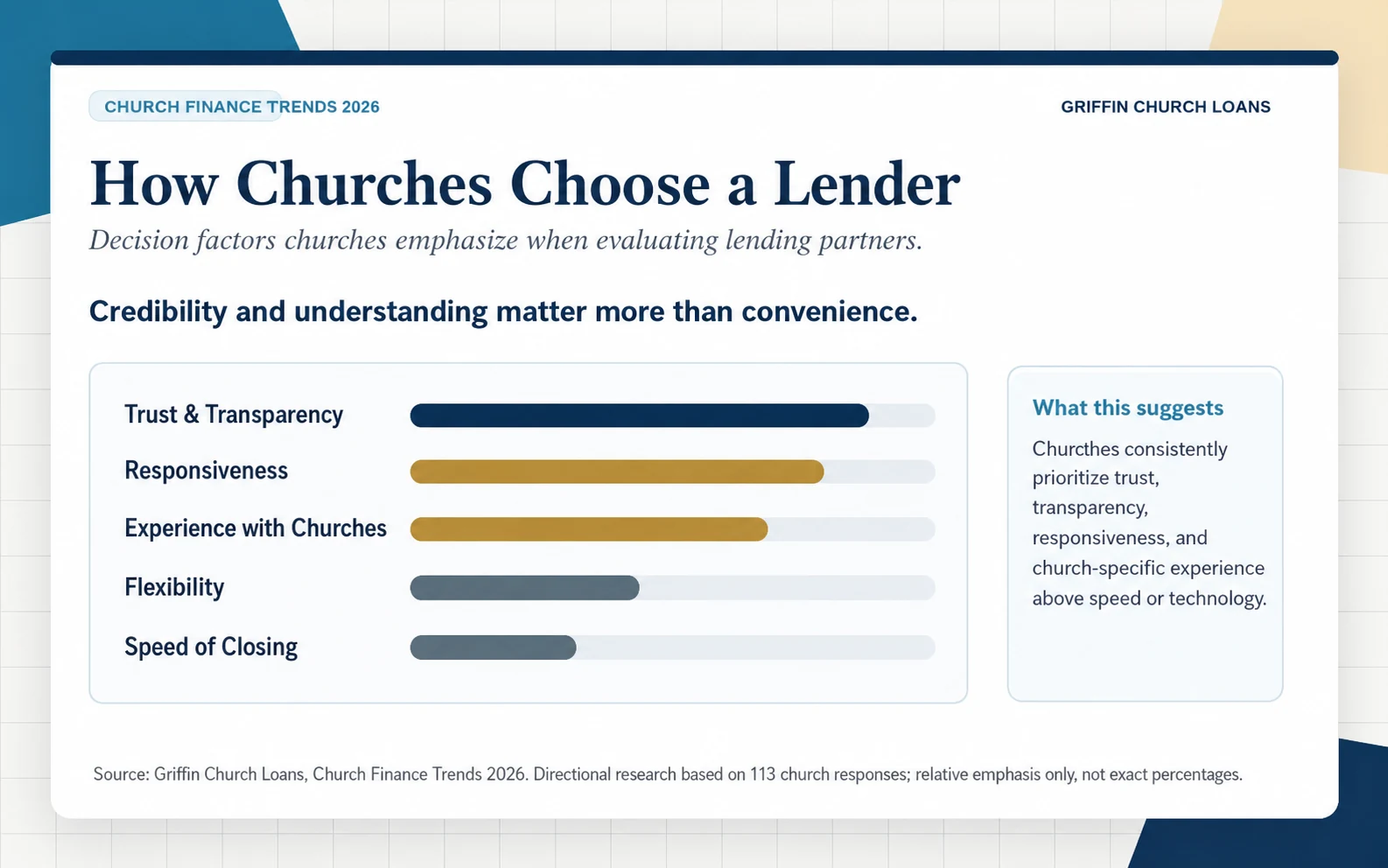
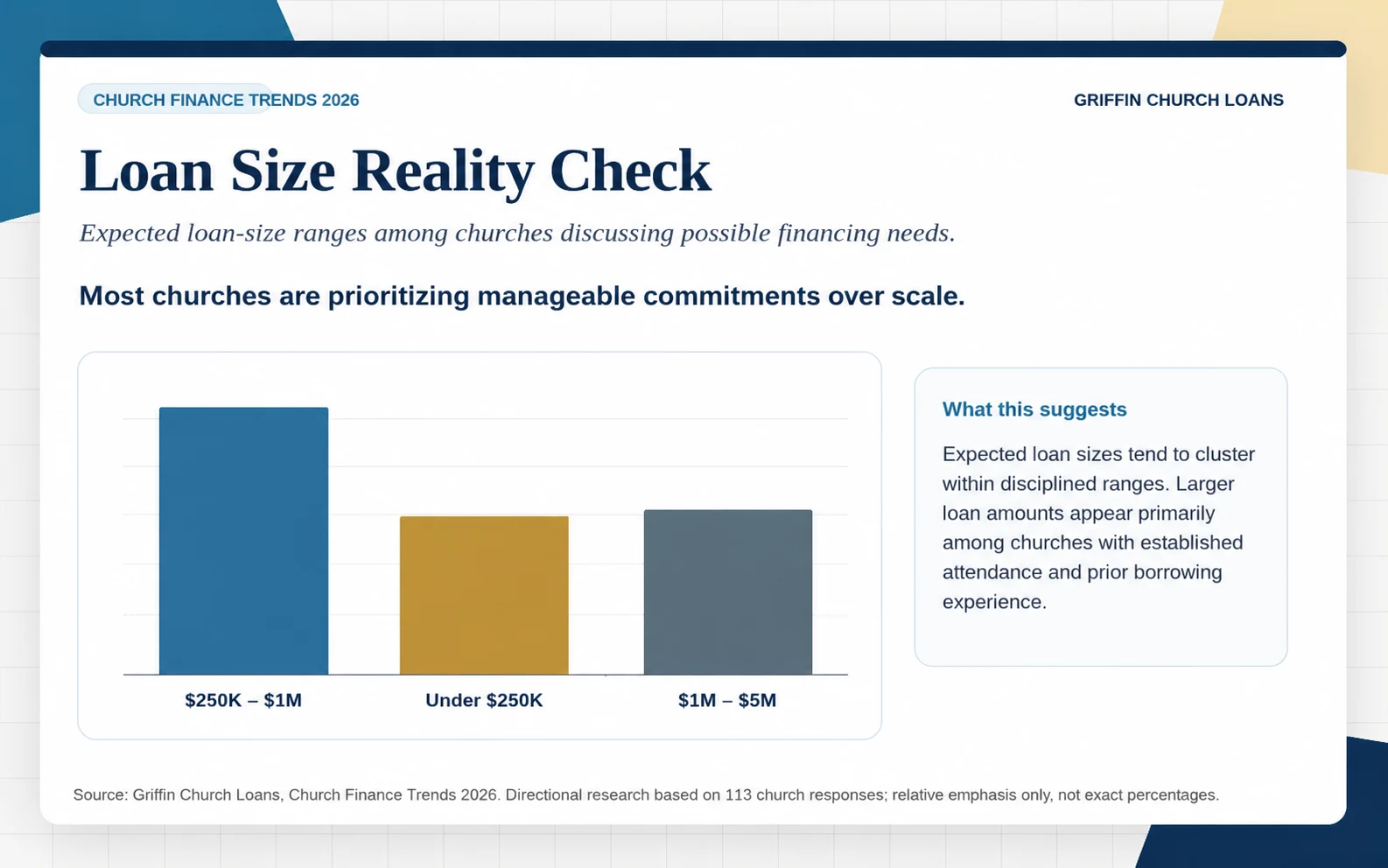
This research reflects the voices of 113 U.S.-based church leaders, offering a grounded view of how churches are thinking and planning for the year ahead. Rather than forecasting outcomes, it documents what leaders are actually experiencing—and how they are responding.
Purpose: to provide clarity, not prediction.
Why This Research Was Conducted
The year ahead presents challenges that are not purely financial.
Church leaders are navigating:
- Lingering economic pressure on congregations
- Rising operating and facility costs
- Increased scrutiny around financial stewardship
- Decision fatigue at the board and senior leadership level
In this environment, speculation is easy—and often misleading.
This research was conducted because listening is more responsible than guessing. Instead of projecting assumptions onto churches, this effort focused on capturing how pastors, treasurers, and boards are thinking in real time.
Churches are not uniform. Their voices deserve to be heard as they are—not simplified, optimized, or reframed for narrative convenience.
Research Method (Brief & Transparent)
- Respondents: 113 U.S. church leaders
- Roles represented: Senior pastors, executive pastors, finance committee members, treasurers, and board leaders
- Timing: Conducted in late 2025
- Method: Anonymous survey
Important note:
This research is descriptive, not predictive. It reflects reported perspectives at a moment in time and should be read as directional insight—not financial advice or universal truth.
Core Insights from Church Leaders
The following themes emerged consistently across responses:
1. Caution Is Replacing Expansion
Many leaders report a shift away from aggressive growth planning toward more conservative, sustainability-focused decision-making.
2. Financial Confidence Varies Widely
While some churches report stability, others describe heightened concern around cash flow, reserves, and future giving reliability.
3. Boards Are More Involved Than Before
Financial decisions are increasingly shared across leadership teams, with boards taking a more active role in oversight and long-term planning.
4. Stewardship Language Is Becoming Central
Leaders are placing renewed emphasis on responsibility, transparency, and restraint—both internally and in communication with congregations.
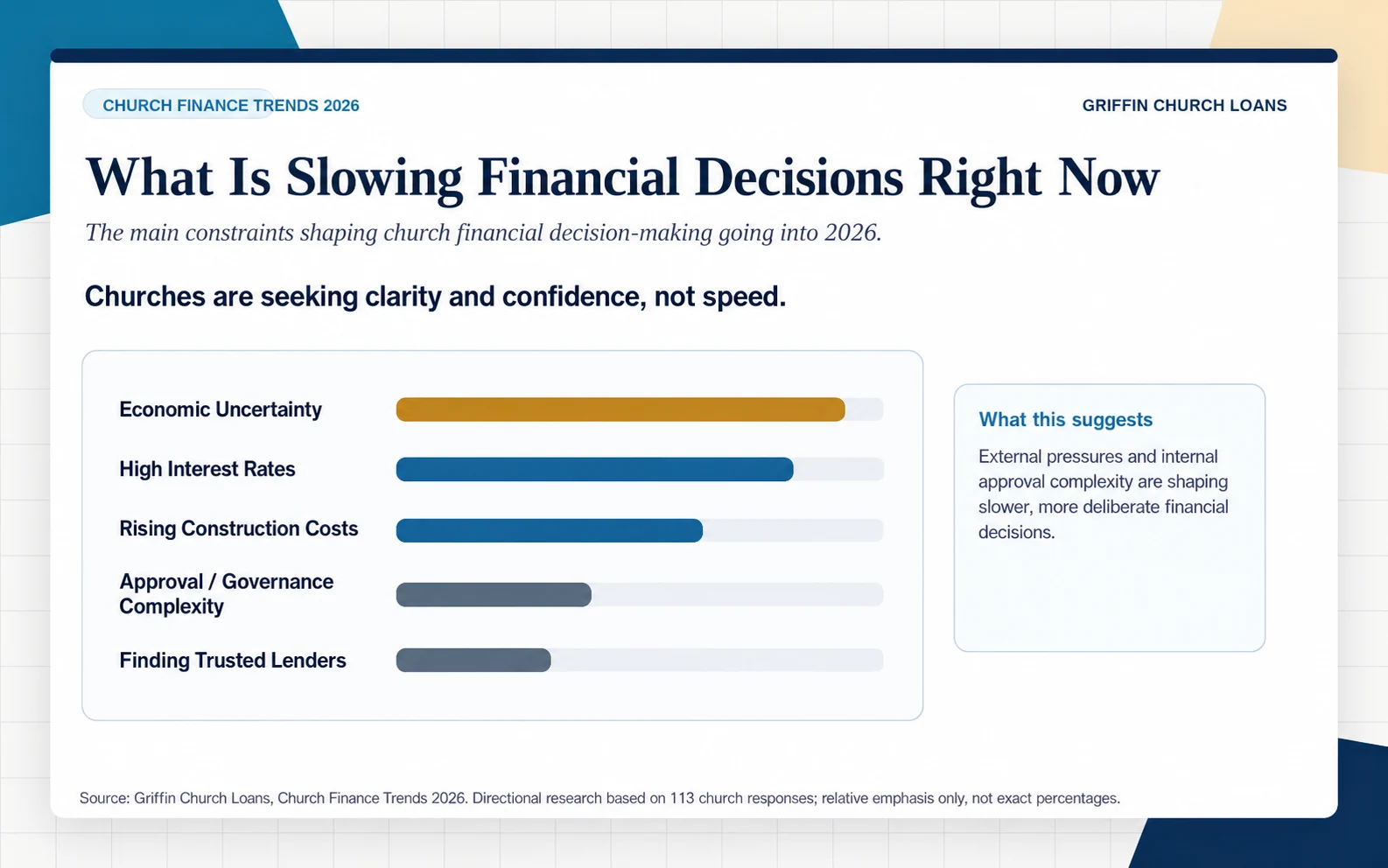
5. Uncertainty Is Driving Deliberation
Rather than urgency, many churches describe slower decision cycles, longer discussions, and a desire to avoid irreversible commitments.
These insights are not signals of weakness. They reflect prudence under complexity.
How to Read the Full Report
This report is designed to:
- Surface patterns in church financial thinking
- Support leadership conversations
- Encourage thoughtful planning
It is not intended to:
- Predict economic outcomes
- Recommend specific financial actions
- Rank or evaluate churches
Leaders are encouraged to use this research as a conversation tool, not a decision substitute.
Full Report Access
The complete Church Finance Trends 2026 report provides:
- Detailed charts and distributions
- Role-based response breakdowns
- Contextual interpretation notes
The full research report is available here.
Church Finance Trends 2026 Survey Report
Related Insight Articles
For additional context, the following editorials explore specific dimensions of the findings:
- How Church Financial Planning Is Changing for 2026
- What Caution Signals Really Mean for Church Leadership
- Stewardship Under Uncertainty: A Leadership Perspective
Each article stands independently while referencing this research as shared context.
About Griffin Church Loans
Griffin Church Loans has worked alongside churches for over 26 years, supporting leadership teams through periods of growth, transition, and uncertainty.
This research reflects a stewardship-first posture: listening carefully, documenting responsibly, and contributing insight without pressure or agenda.
This research was conducted by Griffin Church Loans as part of its ongoing effort to listen to and learn from church leaders nationwide.